
How Bench Warrants Work in Emery County
A judge signs a bench warrant from the bench, usually after someone skips a required appearance. The Emery County docket behind it could be almost anything. Traffic citations, ordinance matters, criminal cases, and civil compliance issues can all end in one. The label alone never tells you which law applies. Utah Code 77-7-19 covers the citation route. It demands an appearance, or an allowed payment, by the deadline printed on the ticket. After nonappearance or nonpayment, a bench warrant can follow. Read the ticket's court name and date before you pick up the phone.
Emery County Bench Warrant Missed Dates
Miss a date in Emery County and the first job is simple. Find the court and case number on the citation, notice, or earlier docket. Then call that clerk. Ask whether a warrant was entered, whether a new setting exists, and what appearance or filing process now applies. A calendar entry helps you spot a hearing. It cannot confirm warrant status, though. If you cannot tell criminal from traffic or civil, do not guess from the word "bench." Ask the court for the case type straight out. And where custody or a disputed order is in play, get legal advice before you act.
Bench Warrant Issuance in Emery County
Utah Rule of Criminal Procedure 6 is the framework. It governs summonses, warrants, failure to appear, service, release terms, and recall. The judge's order lands in the case record itself. Law enforcement may execute it. Only the issuing court can recall it or change release terms later. For a traffic citation, the citation statute supplies the court's authority as well. One caution for Emery County readers: a warrant does not disappear just because you paid a related amount or the record grew old. Ask the court whether an order was entered.
Older Emery County Bench Warrants
Older open citations and warrants get a court review under Utah Rule 4-703. That rule lays out an order-to-show-cause process. It is administrative case handling, not amnesty. It sets no automatic expiration date either. Emery County readers with an aging warrant should read the official rule text rather than trust a rumor that an old warrant cleared.
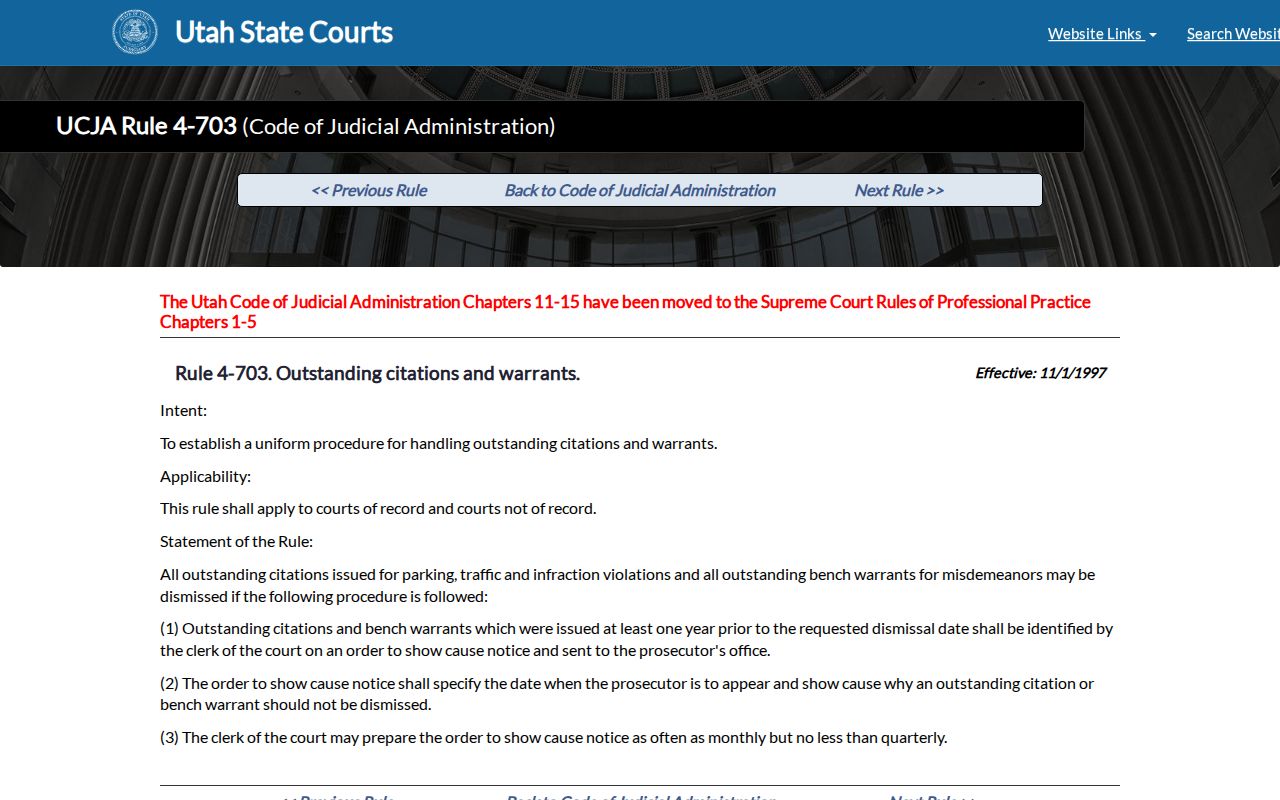
Ask the issuing clerk whether the court has acted on a particular case.
How Bench and Arrest Warrants Differ
Both kinds can put you in custody. They start differently, though. A bench warrant in Emery County ties to a court appearance or a compliance event, while an arrest warrant follows a probable-cause process for an alleged offense. The issuing court and case file answer which one you face.
| Feature | Bench Warrant | Arrest Warrant |
|---|---|---|
| Trigger | Missed setting or compliance event | Probable cause under the warrant process |
| Source | Existing court case or citation | Criminal investigation or filed charge |
| Decision maker | Judge handling the case | Magistrate or judge |
| Next step | Ask about appearance, recall, or compliance | Ask about counsel, release, and court process |
Emery County Civil Bench Warrants
Not every warrant in Emery County is criminal. A civil supplemental-proceeding bench warrant can issue when a judgment debtor ignores an order to appear. Utah Courts describes the path: a creditor may request a contempt or warrant step, and the court may reschedule the matter and set bail. That is nothing like an arrest warrant on a criminal charge. Before assuming "warrant" means criminal, check the case category on the docket and ask the clerk what order sits in the file. The official supplemental-proceeding guide walks through this civil process.
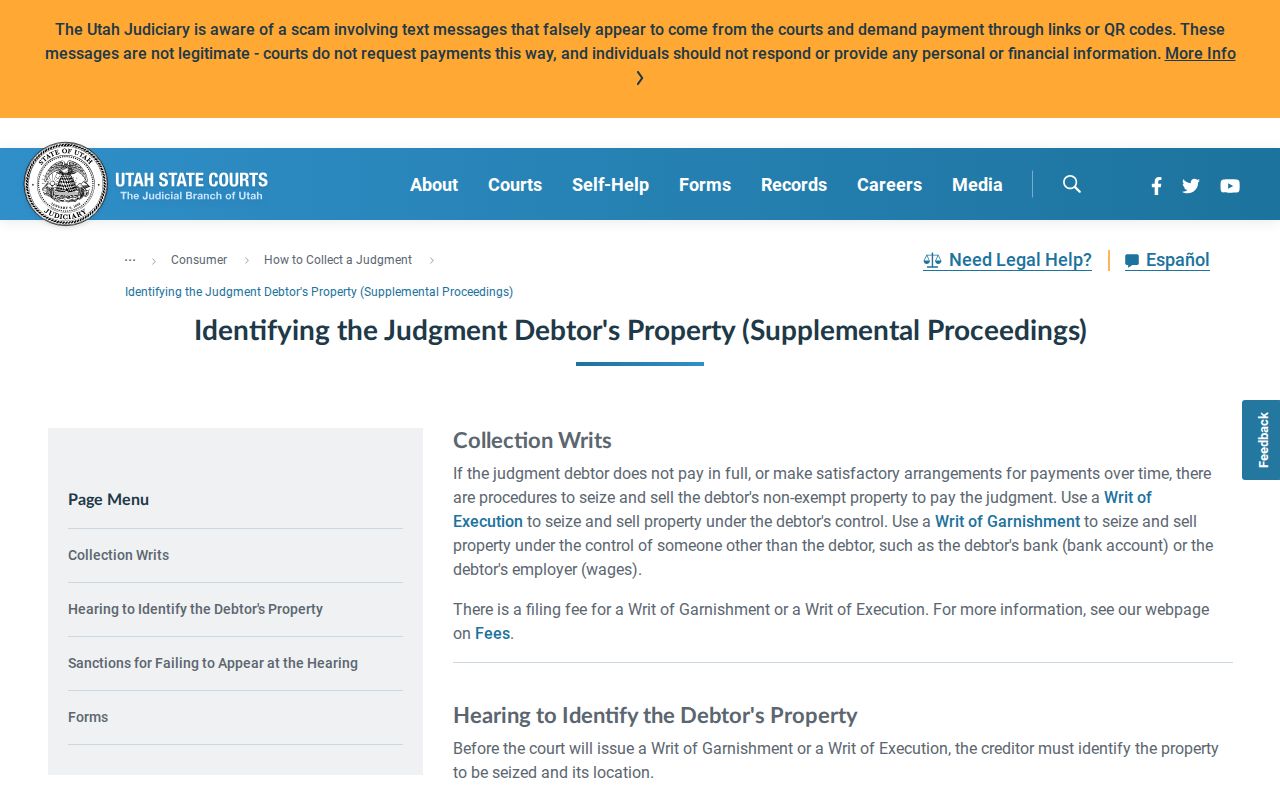
The court's civil process page details how an attendance order works in a judgment case.
Clearing a Bench Warrant in Emery County
Only the issuing court picks the path. Depending on the case, that may mean a lawyer, a motion to recall or quash, an appearance, payment of a known court amount, bond, or some other instruction. Emery County publishes no current bond-window schedule. Ask the clerk what applies to your case.
- Confirm the court and status with the issuing clerk.
- Ask a lawyer whether a motion or planned appearance fits the case.
- Follow the court’s instructions for filing, payment, bond, or a new date.
- Get confirmation that the court entered any recall or release order.
Caution: Do not assume an older bench warrant expired; confirm its status and the safe appearance process with the issuing court or counsel.
Capias Labels in Emery County Cases
Utah paperwork says "bench warrant" or "warrant." The word "capias" can show up as a legal synonym or a docket entry. Emery County has no separate capias search or public process. So a single word on a notice tells you nothing about a new charge, a fine, or a court date. Give the clerk the exact wording and ask what order is active. A motion to recall or quash is a request to the court. Neither the Sheriff's Office nor a payment processor can grant it.
Emery County Courts That Issue Bench Warrants
Emery County Justice Court and Seventh District Court work different case levels. The current directory also lists a kiosk at Green River City Hall, which is a service point, not proof of a separate city court. Older statistics show Green River Justice Court activity in past fiscal years. Treat those figures as history, not current structure. Check the Utah Courts directory for today's office route. Questions about the court order go to the clerk of the issuing court, not the Sheriff's Office.
Emery County Justice Court
1850 N 560 W, Castle Dale
435-381-5194
Weekdays, 8:30 AM to 5 PM except county holidays.
Seventh District Court
1850 North Des Bee Dove Road, Castle Dale
435-264-4750
Use the current state directory before travel.
Emery County Bench Warrant Counsel and Rights
The Emery County Attorney's page sends court-appointed-counsel questions to the court itself. The local Justice Court rights-and-waiver form explains counsel choices and eligibility screening where jail time is possible. The county lists no current appointed-defense provider contact. Ask the clerk for the current route. The County Attorney's office page also points to Utah Legal Services for free noncriminal legal help, which is not criminal-defense representation.
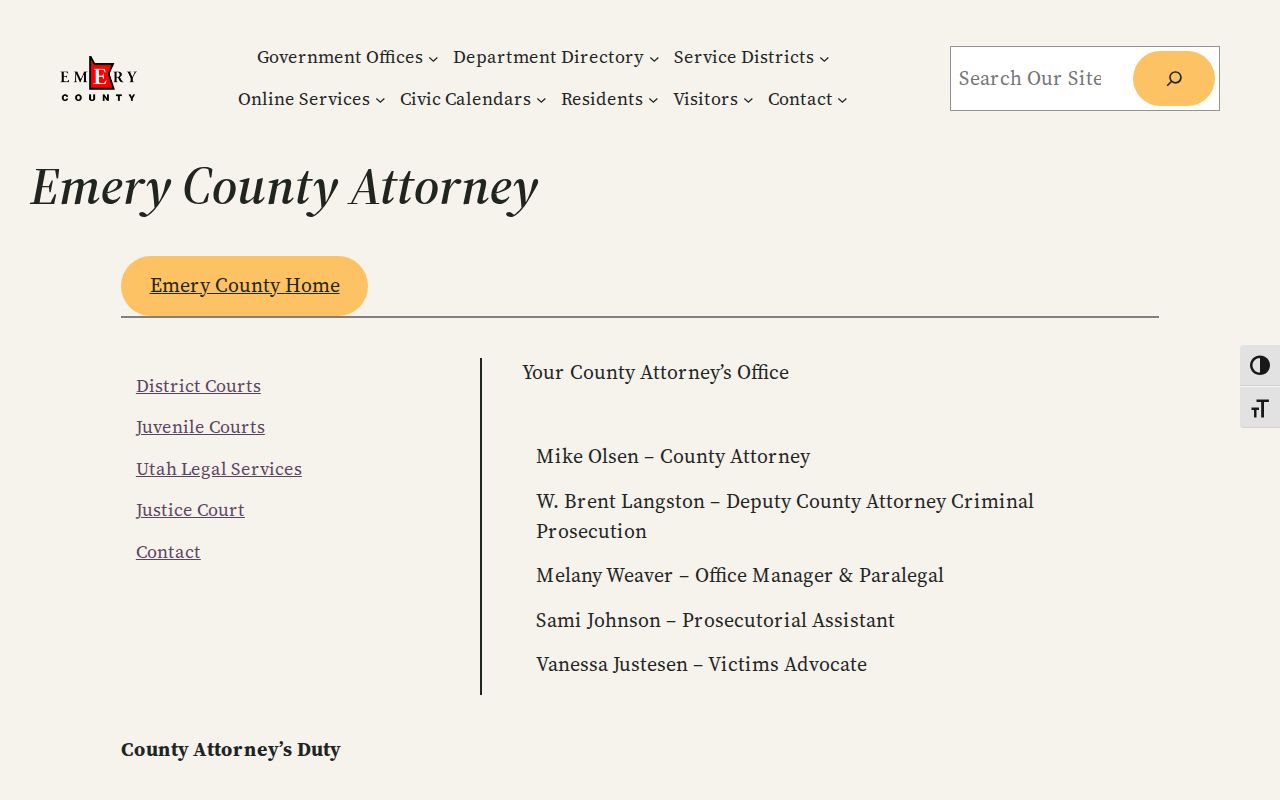
For case-specific advice, contact a lawyer who handles the relevant court matter.