
Emery County Warrant Checks
Begin with the free Utah Statewide Warrants file, then confirm that the court or agency shown matches the case you actually mean. The form asks for a first and last name, takes a middle initial, and includes a reCAPTCHA check. It is a first pass only. A clerk in Emery County can still say whether a warrant remains active and what step the court requires next. Write down the court name, case or warrant number, and any status or date a match displays. A name match is not proof of identity, since common names pull up strangers. An empty result is not the final word either, because local, sealed, juvenile, or newly entered matters can stay out of view. Treat any warrant lookup as a lead to verify with the issuing court.
- Open BCI’s statewide search and enter your first and last name; add a middle initial if useful.
- Record only the court, case number, date, and type needed to follow up.
- Compare the court calendar or a case service that fits your access rights.
- Call the issuing clerk, or request the public docket if the result stays unclear.
- Ask the court or a lawyer what appearance, motion, payment, or release step applies.
Emery County Statewide Warrant Search
The Bureau of Criminal Identification, or BCI, runs the Statewide Warrants file under the Utah Department of Public Safety. Courts feed warrant data into that system, so what you see depends on when each court entered its information and updated it later. Emery County posts no separate public sheriff warrant list. The state file stands on its own as the public warrant search. Before opening the form, read the BCI warrant-search explanation for guidance on the fields. That state page is the official source to use for an Emery County name check, and it walks through what the search covers rather than any person's result.
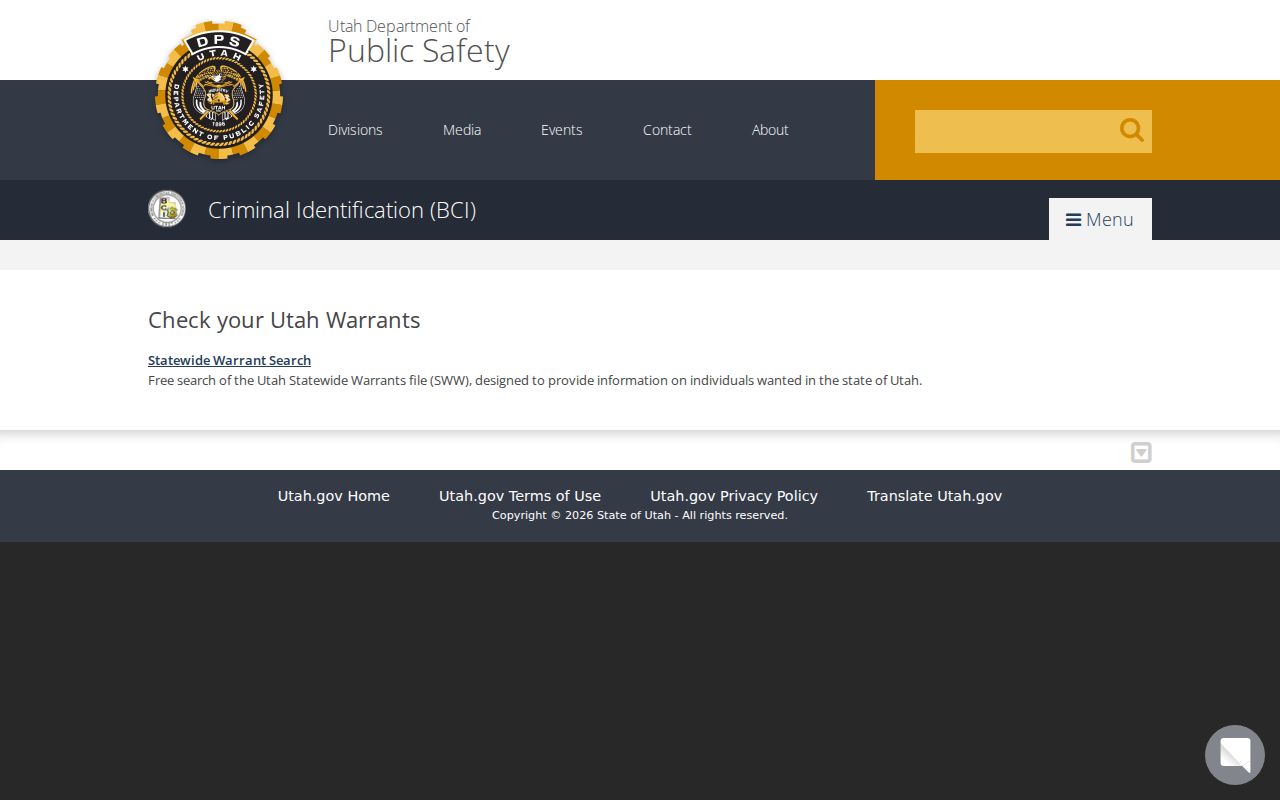
Treat the form as a starting point for Emery County warrant checks. Then ask the court named in a match to confirm the current docket.
Warrants in Emery County: The Main Types
Warrant labels matter in Emery County, because each order does a different job. An arrest warrant follows a probable-cause process. A bench warrant can follow a missed appearance or another compliance failure. A search warrant authorizes officers to look for evidence, not to arrest by itself. Utah sources also use the word "capias," though Emery County offers no separate capias portal.
| Warrant Type | How It Arises | Who Issues It |
|---|---|---|
| Arrest warrant | Probable cause and a need for a warrant under Utah law | Magistrate or court |
| Bench warrant | Missed appearance or a court compliance issue | Court handling the case |
| Search warrant | Probable cause to search for evidence | Magistrate under Rule 40 |
| Capias label | May appear in legal or docket wording | Confirm meaning with issuing court |
Castle Dale Courts and Warrant Records
Castle Dale holds the county seat, yet "the courthouse" can point to several different offices in Emery County. Emery County Justice Court sits at 1850 N 560 W. The current Utah Courts directory lists Seventh District Court at 1850 North Des Bee Dove Road, and the sheriff appears at Des Bee Dove Road too. The county administration Old Courthouse sits at 75 East Main, which is a different address entirely. Check the current Utah Courts directory for Emery County before you drive anywhere, since it is a stronger District Court source than older county listings. A calendar location or a Green River kiosk listing hints at service, not at a separate current Green River court. The Justice Court's public page adds case calendar, payment, fee, and rights-form links, which help you find the right local desk.
Emery County Warrant Records: What They Show
A public case view in Emery County may show the court, case number, case type, charge or citation, dates, and docket events. A warrant entry can display an issue, service, recall, or release event when public. No county-wide warrant-number format exists, so never infer a code from a partial number.
| Case or warrant number | Use the identifier shown by the issuing court. No local sample format was published. |
|---|---|
| Name | Names help find a file but do not prove identity. |
| Charge or citation | Read the court’s case label and citation details. |
| Issuing court | Identifies which clerk can confirm the docket. |
| Release terms | Ask the court about any bond or appearance instruction. |
| Status event | Confirm service, recall, or update with the court. |
Emery County Status Checks Need a Clerk
A possible match from BCI still needs the issuing court, because the court controls the docket. Utah Courts Calendar can display a scheduled proceeding; it is not a warrant list. MyCourtCase serves parties who link their own cases, while Xchange supports public case research under access limits and fees. Run the Utah Courts Calendar for a hearing date, then call the court named in the case. No calendar event does not mean no warrant, and a calendar entry alone does not mean one is still active. For a district matter, call 435-264-4750. For an Emery County Justice Court case, call 435-381-5194.
Emery County Warrants: Who Issues, Who Serves
Judges and magistrates in Emery County issue warrants; law-enforcement officers serve them. Seventh District Court handles district matters, and Emery County Justice Court handles its own lower-level cases. The Emery County Attorney prosecutes, but that office is not the clerk and does not decide whether a judge recalls a warrant. The Emery County Sheriff's Office page is the official agency route, though the sheriff posts no public warrant roster or dedicated warrant line. Call the sheriff's main number for agency routing. Status questions go to the issuing court.
Emery County Sheriff’s Office
1850 North Des Bee Dove Road
Castle Dale, UT
435-381-2404
Emery County Warrant Result Steps
A hit on a warrant search means one thing first: write down the court name and case number. Skip anything else. Then call the clerk, using a number from the official directory rather than a number someone hands you, and ask three questions. Is the entry current? What process applies to an Emery County case like this? Do you need a motion, an appearance, or a lawyer? Emery Justice Court's official case page posts its phone, address, weekday hours, and local resources, so the number is easy to confirm. A clerk there can walk you through filing and payment directions. What a clerk cannot do is give legal advice or promise a same-day recall. If arrest or custody seems possible, talk to a lawyer about the safest appearance and release plan before you walk into any office.
Handling an Emery County Warrant
In Emery County, the issuing court alone picks the next step: an appearance, a motion to recall or quash, payment where the case allows it, bond, or some other order. Recall means the court withdraws the warrant. A phone call, a receipt, or a records request is not a recall order. When arrest, custody, or disputed facts are in play, have counsel review the case.
Important: Before traveling to surrender or post bond, ask the issuing court or a lawyer what process and release terms apply.
Emery County Payment Is Not Recall
The Castle Dale Justice Court payment form takes a known amount and asks for case or citation details, the citation recipient's name, payer contact information, and a payment method. Its live page lists a 2.5% card fee with a $2.50 minimum, and 1.5% more for a foreign card. Check the live fee before you pay anything. Open the Castle Dale Justice Court payment form only after the court has confirmed the amount and method, because paying there does not mean an Emery County warrant is recalled on its own. A receipt and a court order are different records in Emery County too. Keep the receipt, call the clerk, and ask whether a separate order or appearance still stands.
Warrant Record Access Under Utah Law
Utah's GRAMA governs many government records, and court files also answer to Judiciary access rules and orders in Emery County. Open access does not open every affidavit or identifier. Juvenile records carry special statutory limits. A search-warrant application may stay sealed for a rule-defined period.
Key Rules:
Utah Code 77-7-5 describes when a magistrate may issue an arrest warrant instead of a summons.
Utah Code 77-7-19 covers citation deadlines and a possible bench warrant after nonappearance or nonpayment.
Utah Code 78A-6-209 sets limits on access to juvenile court records.
Emery County Access Limits and Requests
When an online case view leaves your question unanswered, request the public docket straight from the court that holds it. Name the court. Add the case number if you have it, the date range, and whether you want inspection or copies. The Utah Judiciary says it usually responds within 10 business days, though complexity and access limits can stretch that. Fees are set: paper copies run $0.25 per sheet, certified copies cost $4 per document plus $0.50 per page, and staff time or media can add more. Read the Judiciary request and fee guidance before you send a form anywhere in Emery County. For one person's file, follow the court's official request instructions and share only the identifiers needed to find that record. A request gets you a record. It cannot change a warrant, so Emery County questions about recall still go to the issuing court.
Emery County Census Cities and Warrant Portals
The 2020 Census incorporated-place table ranks Huntington, Castle Dale, Ferron, Orangeville, and Green River as Emery County's five largest cities. The numbers are context only. The table reports populations, not warrant counts. Each city's own pages carry civic information, while the court named on a citation remains the source for a case. The Census incorporated-place table supplies the population comparison itself, and it is a reference table rather than a roster of court or law-enforcement records.
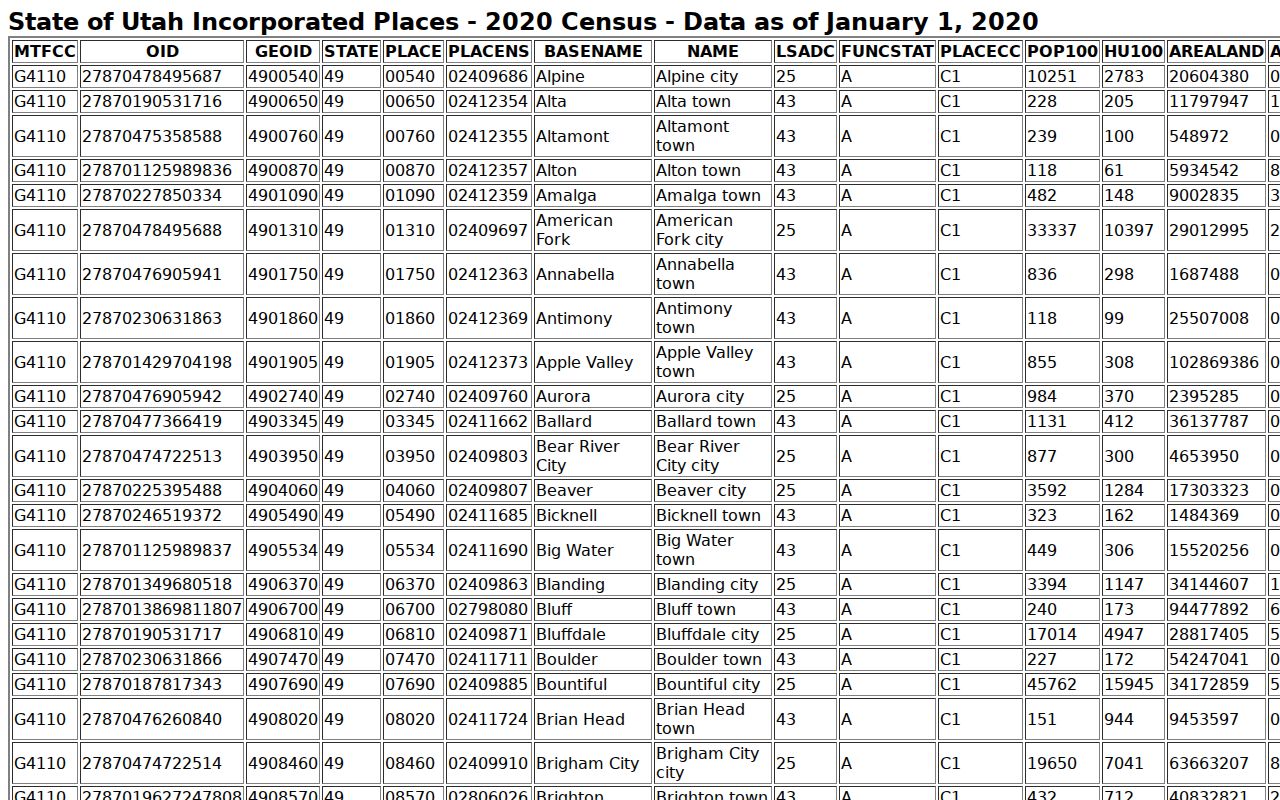
Each city keeps its own page here for local contacts and court-routing notes. Emery County's economic development and community page adds local-history and city-contact context. It is not a court or warrant directory.
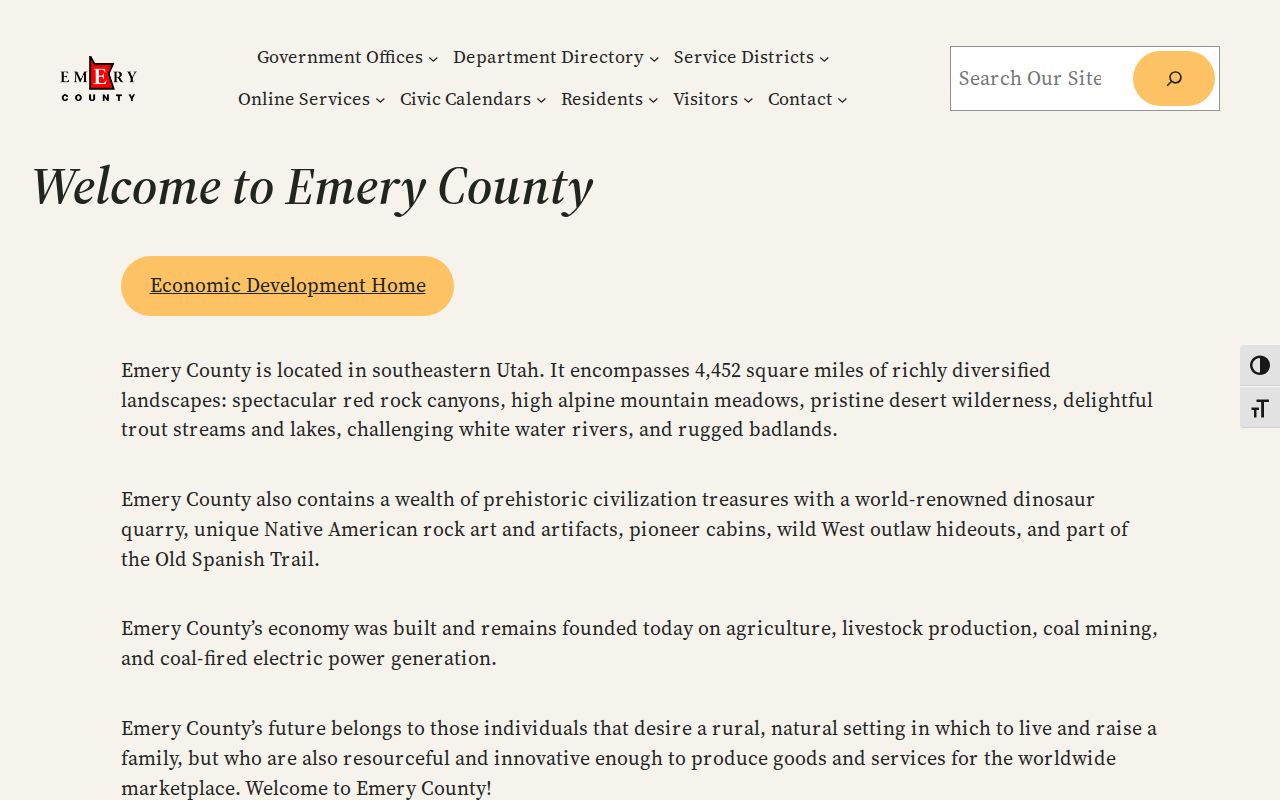
Use city-government sources for local services and court sources for case records.
City Warrant Records in Emery County
These figures come from the 2020 Census incorporated-place table and rank the five largest cities in Emery County in order. They say nothing about warrant counts. None of the cities posts a police or municipal warrant portal of its own, so a resident's best path is the state search plus the court named on a citation or result. The Census place table supplies the comparable population source. City halls handle local government questions. The court that issued a case controls its warrant status.
Huntington
1,914 residents in 2020; no city warrant portal located.
Castle Dale
1,492 residents in 2020; county seat and court-service hub.
Ferron
1,474 residents in 2020; use the citation’s issuing court.
Orangeville
1,224 residents in 2020; city hall is not the court clerk.
Green River
847 residents in 2020; current directory shows a court kiosk.